Photo: Zebrio · CC BY-SA 2.0 · Wikimedia Commons · source
Ricoh · Point & Shoot
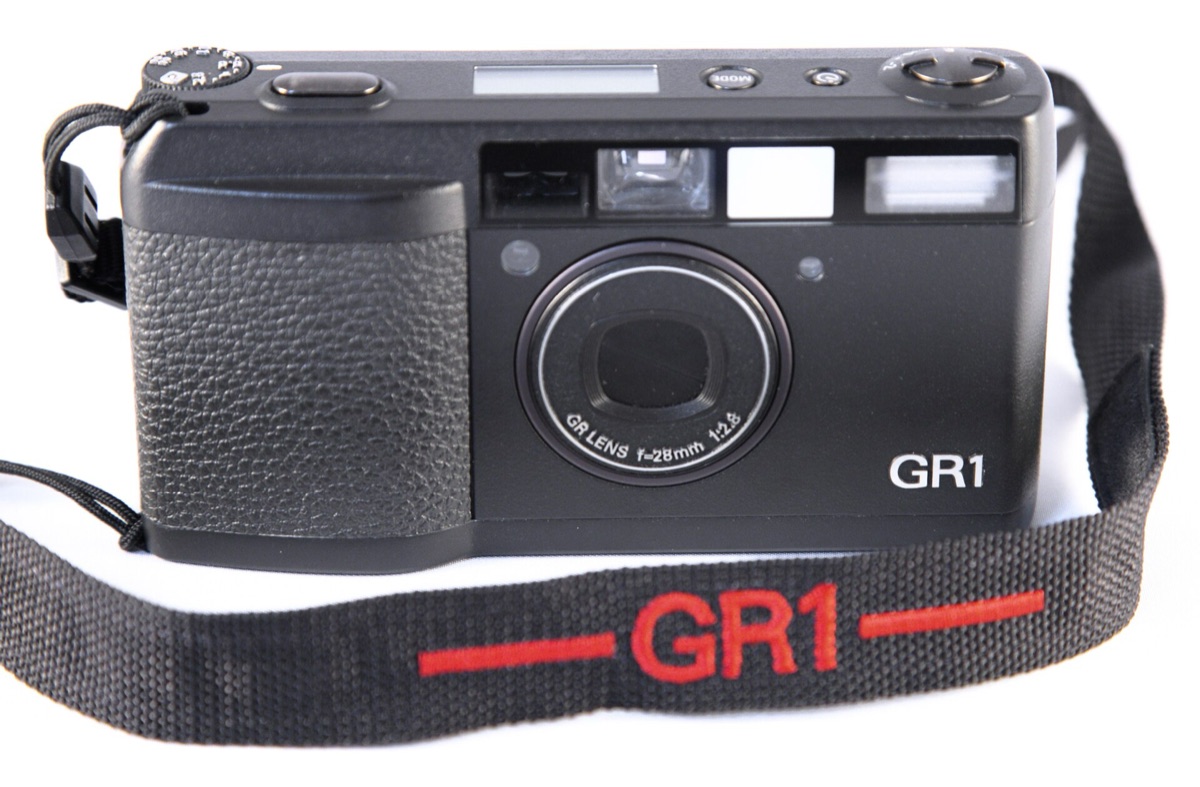
Ricoh GR1
The Ricoh GR1 makes sense when you want to walk with one small film camera and frame the world wide. Its fixed 28mm f/2.8 lens fits street scenes, travel and the ordinary things that happen too quickly to arrange. The catch is buying a decades-old electronic camera that actually works.
~$650–1100 typical used price · updated 2026-09-23
01Quick character
The GR1's 28mm view includes more of the scene than a typical 35mm compact. It rewards getting close, watching the edges of your frame and letting the setting tell part of the story. Film stock, exposure and scanning shape the final colors and contrast; a camera body alone doesn't produce a guaranteed “GR look.”
Editorial guidance, not lab measurements — examples vary, and film & processing change the result.
Who it's for, and who should skip it
Choose it if portability matters, you enjoy wide-angle framing and you want aperture-priority exposure control in a compact 35mm camera. Consider another camera if you prefer a tighter portrait perspective, interchangeable lenses or a low-risk repair path. Don't pay a collector's premium for an untested example just because the lens has a reputation.
Ricoh GR1 vs GR1s vs GR1v: what's actually different?
| Model | Release | Practical difference |
|---|---|---|
| GR1 | October 1996 | Original film GR with 28mm f/2.8 lens, autofocus and aperture-priority AE. |
| GR1s | April 1998 | Adds compatibility with a dedicated lens hood and illuminated finder information for dim conditions. |
| GR1v | September 2001 | Adds auto exposure bracketing, manual film-speed setting and a manual-focus mode. |
All three retain the core 28mm f/2.8 GR lens concept. The GR1v offers more controls, but that doesn't make an aging GR1v automatically a better purchase than a tested GR1. Compare the condition of the actual camera, not only the letters after its name.
Manufacturer sources: Ricoh GR1, Ricoh GR1s, Ricoh GR1v. Specifications checked 2026-10-28.
02Best for
Use cases: Street · Travel · Everyday
Control: Some control
Beginner friendly: 3/5
Portability: 5/5
What it feels like
A point & shoot with autofocus focusing and aperture priority + ae exposure — The Ricoh GR1 makes sense when you want to walk with one small film camera and frame the world wide. Its fixed 28mm f/2.8 lens fits street scenes, travel and the ordinary things that happen too quickly to arrange. The catch is buying a decades-old electronic camera that actually works.
03Key specifications
| Format | 35mm |
| Camera type | Point & Shoot |
| Lens | 28mm f/2.8 GR |
| Focusing | Autofocus |
| Exposure | Aperture priority + AE |
| Flash | Built-in |
| Production | 1996–2001 |
Known buying issues
- High used prices
- LCD can fail
- Focus mechanism can jam
- Flash capacitor aging
04Used buying checklist
- Ask for a recent photo of the camera switched on, with all top LCD segments visible. An unpowered photo doesn't establish working condition.
- Test the shutter, autofocus confirmation and film advance/rewind with a sacrificial roll if the seller permits. Listen for unusual stalls and verify the lens extends and retracts.
- Fire the flash and test aperture-priority behavior under different lighting. Check that buttons and controls respond.
- Inspect the battery compartment for corrosion, the lens for haze or fungus, and the door seals for deterioration.
- Prefer a seller who describes actual tests and provides a meaningful return policy. “Powers on” is not the same as “film tested.”
Important: This checklist is practical buying guidance, not a claim that a specific failure is universal. A fully tested camera can still develop faults later.
05Film pairings
For classic black-and-white street scenes, start with Ilford HP5 Plus and decide whether you prefer grain and contrast after seeing your scans. For color and skin tones, a flexible ISO 400 color-negative stock such as Kodak Portra 400 can work in mixed travel light. Neither film guarantees a particular look: exposure, processing and scanning matter.
06Current price options
Used-market prices change quickly with condition, seller, region and accessories. The site's displayed price range is an estimate dated 2026-09-23, not a verified live quote for 2026-10-28. Keep the date visible and don't silently refresh it without merchant evidence. Affiliate links, if any, must be disclosed accurately rather than described as “will be added” indefinitely.
FAQ
Is the Ricoh GR1 digital?
No. The original GR1 is a 35mm film camera launched in 1996. The digital GR line came later.
Does the GR1 have zoom?
No. Its fixed 28mm lens is part of the appeal, and part of the limitation.
Is the GR1v worth more than the GR1?
Extra controls may matter to some photographers, but the sensible used-camera choice starts with working condition, serviceability and return terms, not model hierarchy.
Next: Browse film cameras, choose a film or explore looks.