
Photo: Lewis Collard · CC BY 2.0 · Wikimedia Commons · source
Olympus · Compact
Olympus Trip 35: A Simple Camera, With One Important Catch
The Olympus Trip 35 is appealing for a reason: you can take it out for a walk, set a distance symbol, and concentrate on the scene. But its simplicity depends on a working light meter. Before buying one, learn how to check that the camera still responds to light.
The look and the experience
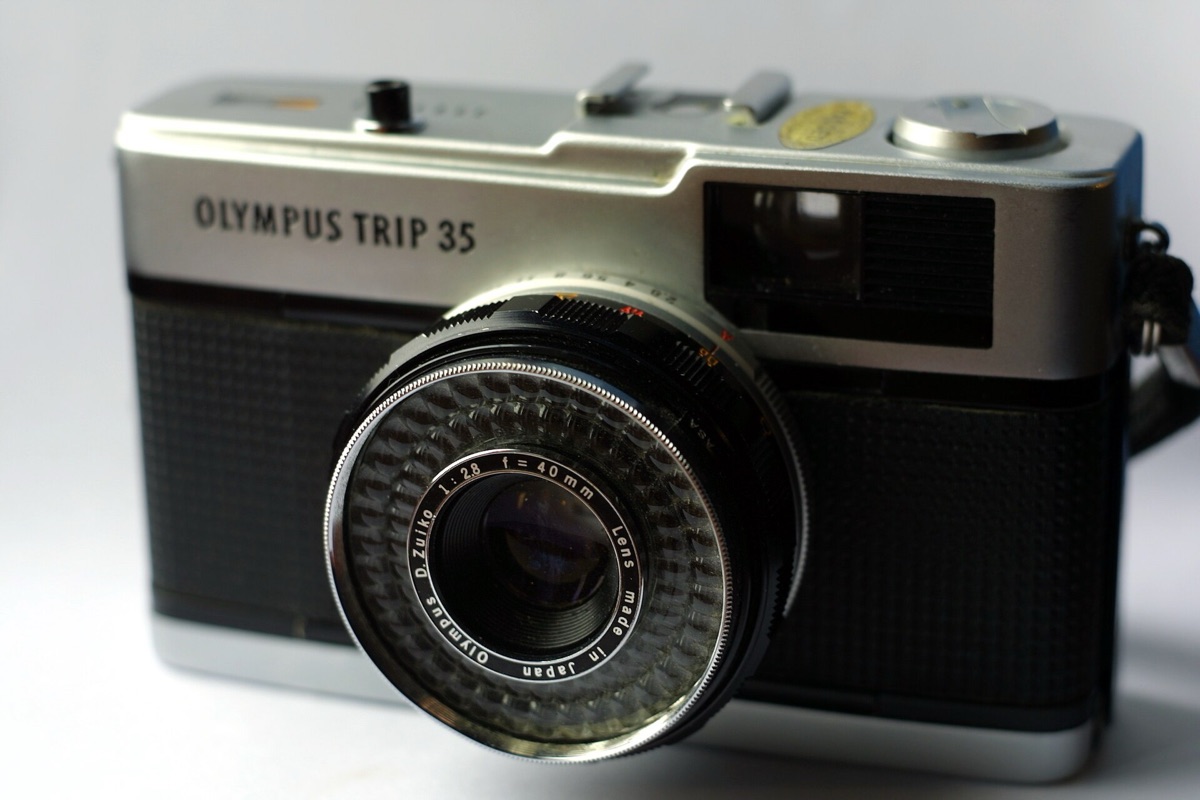
This is a 35mm film compact with a fixed 40mm f/2.8 lens. Its 1960s-era design invites a slower, deliberate rhythm: choose a focus zone, frame the shot, and shoot. The camera doesn't offer autofocus or a modern screen. Its results still depend on film, available light, accurate focus, and the condition of your individual copy.
For warm daylight color, start by comparing Kodak Gold 200 with other color-negative films in the film directory. A different film changes the look more reliably than any claim that a camera automatically produces a particular color palette.
How does the battery-free exposure work?
The Trip 35 uses a selenium light meter to control automatic exposure, so ordinary operation does not require a battery. The meter is not immortal. An aged or damaged meter can make an otherwise attractive camera unreliable.
The camera uses zone focusing rather than autofocus. You choose an approximate subject distance before pressing the shutter. This is convenient for daylight walks, but close portraits need more care than casual street scenes.
What should you check before buying used?
1. Ask for a daylight meter demonstration. With the camera set to automatic exposure, check that the low-light warning behavior changes appropriately between bright and dim conditions. A warning indicator alone is not proof of accurate exposure.
2. Inspect the lens and viewfinder. Look for haze, fungus, deep scratches, and a viewfinder that is difficult to see through.
3. Inspect seals and film transport. Ask whether the back seals have been serviced; open the back only with the seller's permission and without film loaded. Check that the advance lever, rewind control, and counter operate normally.
4. Test the shutter and focus controls. Confirm the shutter fires as expected and the distance symbols move correctly. A dry-fire test cannot confirm exposure accuracy or light-tightness.
5. Request sample negatives or a return option. A recent, properly exposed test roll is stronger evidence than a listing that merely says 'working.'
A seller's 'tested' label may mean only that the shutter clicks. Ask exactly what was tested.
Who is it for, and who should skip it?
Choose the Trip 35 if you enjoy a compact, manual-distance shooting experience and can buy a verified working example. Skip it if you need autofocus, reliable low-light shooting without extra thought, or a used camera with no inspection or return possibility.
If you want a pocket camera with a different control style, compare the Olympus XA and Olympus XA2. The point is not which name is more collectible. It's which shooting experience you'll actually use.
Frequently asked questions
Does the Olympus Trip 35 need batteries? No for its standard selenium-metered operation. That doesn't guarantee the meter still works decades later.
Is it autofocus? No. It uses manually selected distance zones.
Can it shoot at night? It is not an effortless low-light camera. Check the lighting, exposure behavior, and whether a flash setup is appropriate before relying on it.
Is it a good first film camera? Potentially, if the meter, transport and seals are verified and you're comfortable learning distance zones. A faulty bargain is not beginner-friendly.
Next: Explore the camera directory, compare film choices, and read the beginner film-camera guides.